

The most expensive mistake in commercial pavement is buying the wrong treatment. A sealcoat over a failing base is money thrown away within a season. An overlay on a lot that only needed a surface treatment is six figures spent a decade early. The decision comes down to what condition the existing pavement is in, not what a contractor has in the yard that week.
In This Article
Sealcoating: Surface Protection
Sealcoating applies a coal tar or asphalt emulsion film over structurally sound pavement.
Slurry Seal: Wear Course Restoration
Slurry seal is a designed mixture of graded aggregate, asphalt emulsion, water, and additives placed as a thin surfacing.
Overlay: Structural Renewal
An overlay places new asphalt over the existing surface, usually after milling to preserve grades and drainage and to keep transitions correct at curbs, gutters, and door thresholds. It restores structural capacity and can correct cross slope and drainage problems that surface treatments cannot touch.
A Simple Decision Path
Ask three questions in order.
Sealcoating: Surface Protection
Sealcoating applies a coal tar or asphalt emulsion film over structurally sound pavement. It blocks UV, resists fuel and oil, and restores the dark uniform finish tenants expect. It adds no structural strength and it will not bridge a crack.
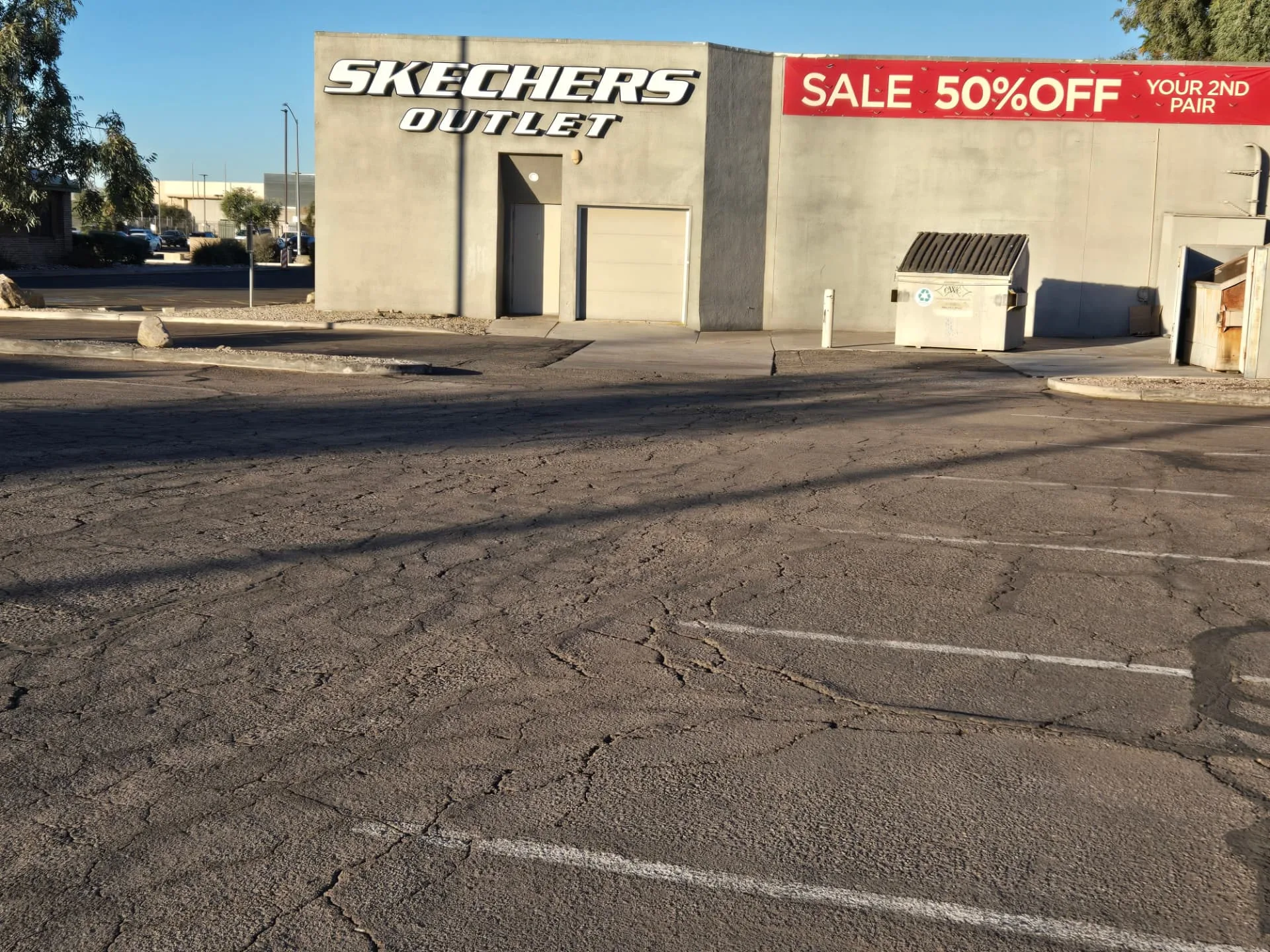
Choose sealcoating when the pavement is sound, cracking is limited and already sealed, and the surface is oxidizing. Do not choose it when the lot has alligatored areas, ponding, or base movement. Full detail is on our sealcoating page.
Slurry Seal: Wear Course Restoration
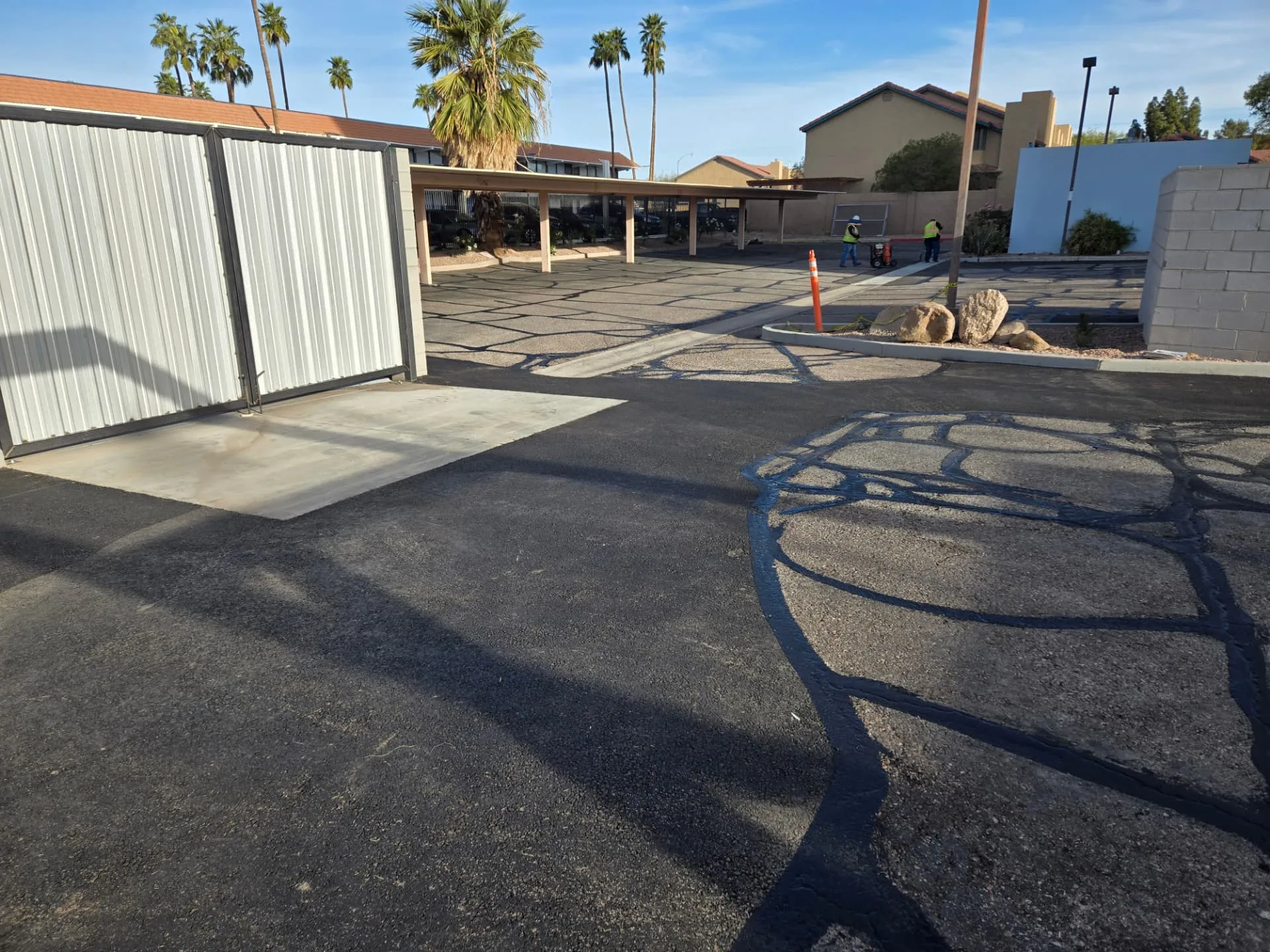
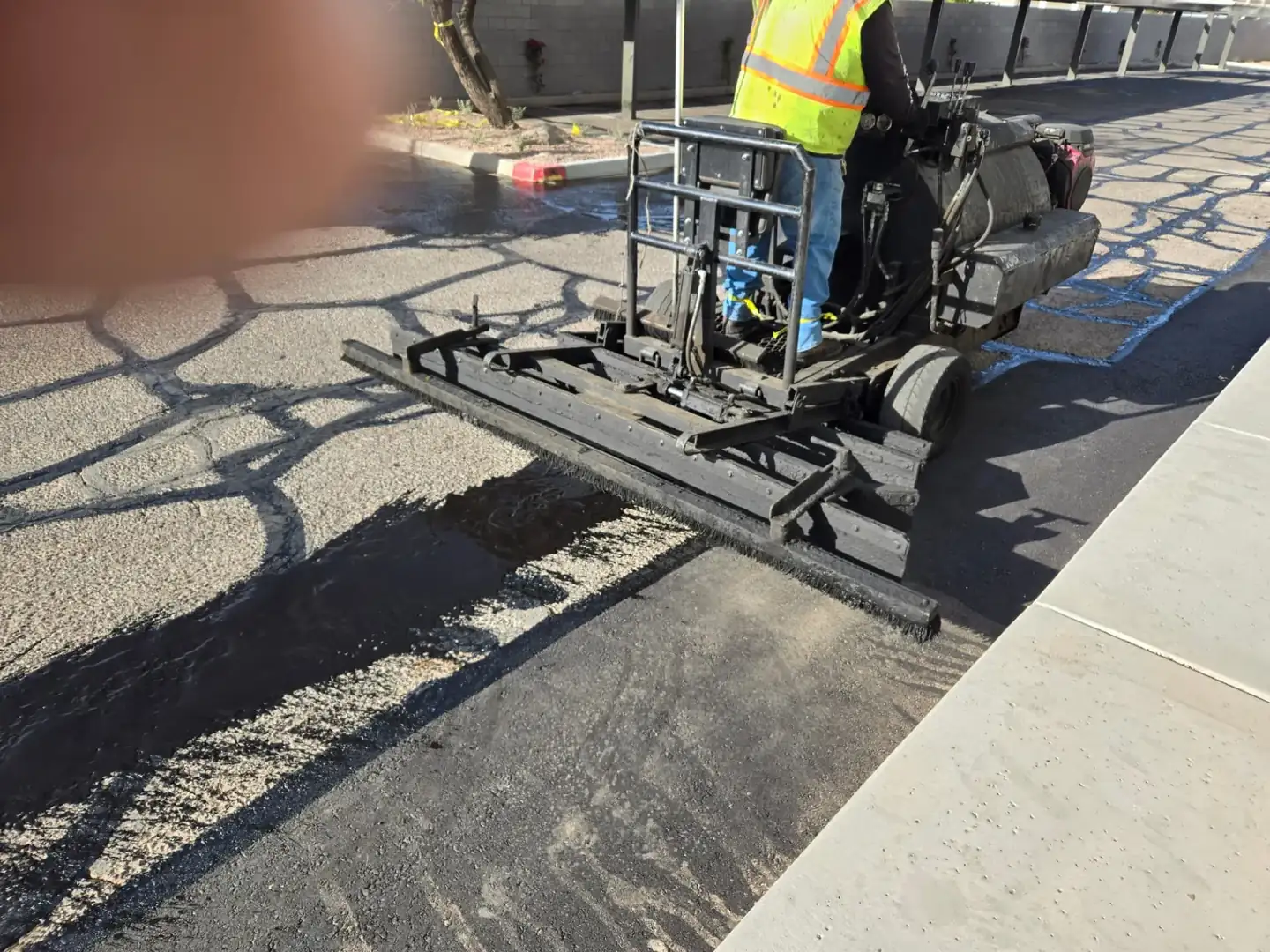
Slurry seal is a designed mixture of graded aggregate, asphalt emulsion, water, and additives placed as a thin surfacing. It fills minor surface voids, corrects raveling, restores skid resistance, and lays down a new wear course. Type 1 handles fine parking areas, Type 2 is the workhorse for commercial lots and streets, Type 3 handles higher traffic roadways, and polymer modified micro surfacing carries the heaviest loads and can correct minor rutting.
Choose slurry seal when the surface has raveled or lost aggregate, when skid resistance has dropped, or when a lot needs more than a coating but has no structural problem. See the slurry seal comparison for a side by side breakdown.
Overlay: Structural Renewal
An overlay places new asphalt over the existing surface, usually after milling to preserve grades and drainage and to keep transitions correct at curbs, gutters, and door thresholds. It restores structural capacity and can correct cross slope and drainage problems that surface treatments cannot touch.
Choose an overlay when cracking is extensive, when there is widespread patching, or when the ride and drainage are wrong. Localized full depth repair often precedes the overlay so failed base is corrected first rather than paved over. Our milling and pulverizing service covers that preparation work.
A Simple Decision Path
Ask three questions in order. Does water sit on the lot after a storm, or do you see areas moving under truck traffic? If yes, the answer is structural repair or overlay, and no surface treatment is appropriate. If no, has the surface raveled or lost skid resistance? If yes, slurry seal is the right wear course. If no, and the pavement is simply gray and oxidizing with sealed cracks, sealcoating is the correct and cheapest answer.
American Asphalt performs all three, which means our recommendation is based on the pavement rather than on the only crew we keep. Every scope is backed by a two year workmanship warranty.
Need An Arizona Commercial Paving Contractor?
Talk to a real American Asphalt estimator, not a call center. Site walks scheduled fast, written scopes, and a two year workmanship warranty on every project.