
Slurry Services
Slurry Seal vs. Sealcoat
Two very different pavement treatments, and one gets confused for the other constantly. Here's the honest comparison from a contractor who places both under Arizona spec.

A WEAR COURSE ISN'T A COAT OF PAINT
"Sealcoat" gets used as a catch-all for any dark treatment on asphalt, but a slurry seal and a sealcoat are two very different products with very different lives. One is a designed wear course used on ADOT and MAG public streets. The other is a thin cosmetic coating.
American Asphalt is licensed for both. This page lays out the honest comparison, material, thickness, service life, spec basis, and where each one actually belongs, so owners, HOA boards, and property managers can budget the right treatment.
- ISSA A105 slurry & A143 micro-surfacing
- MAG 336 & ADOT 407 spec fluency
- Honest treatment recommendation, every job
- ROC 155730 · 109709 · 105759, bonded & insured
- Reserve-study & CIP-friendly pricing
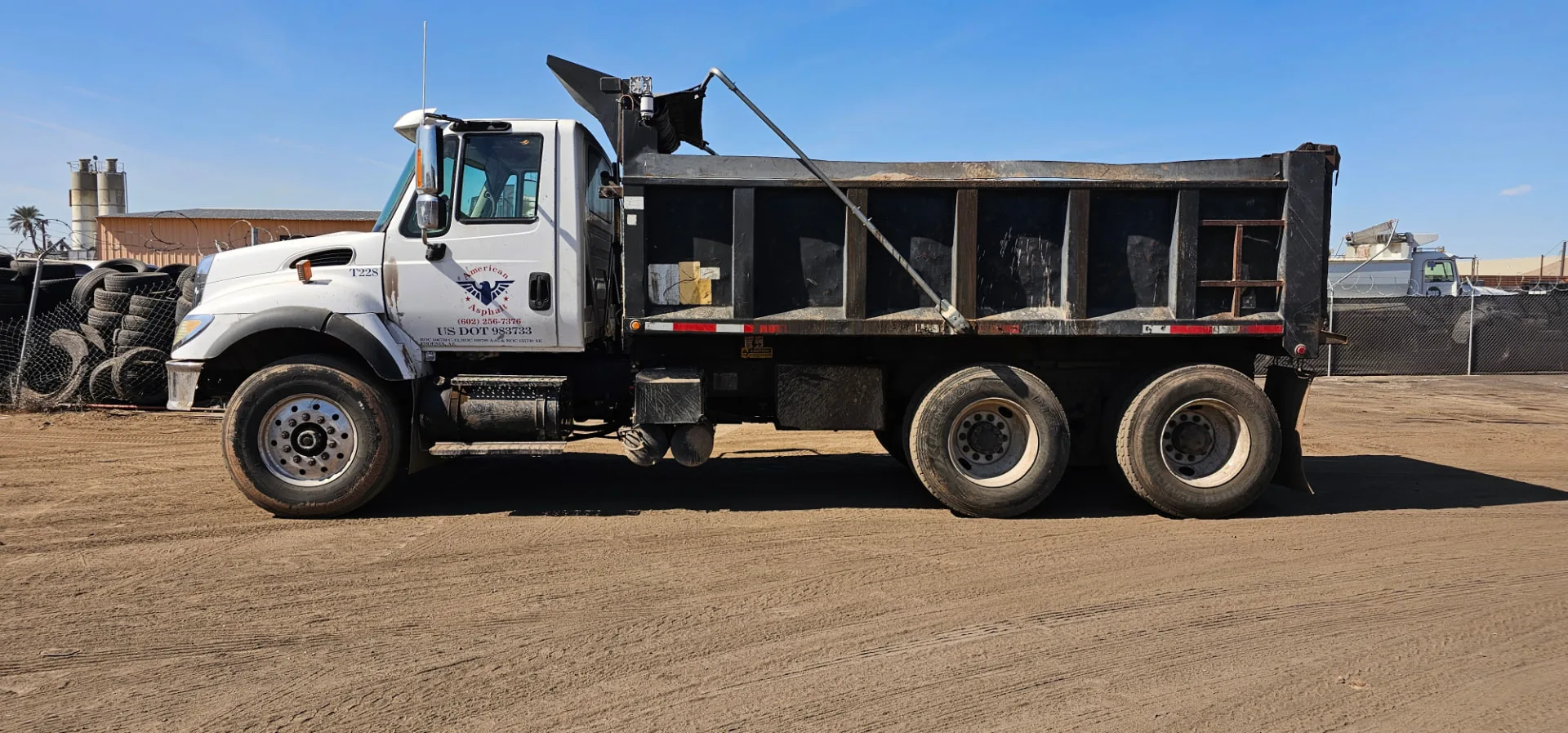
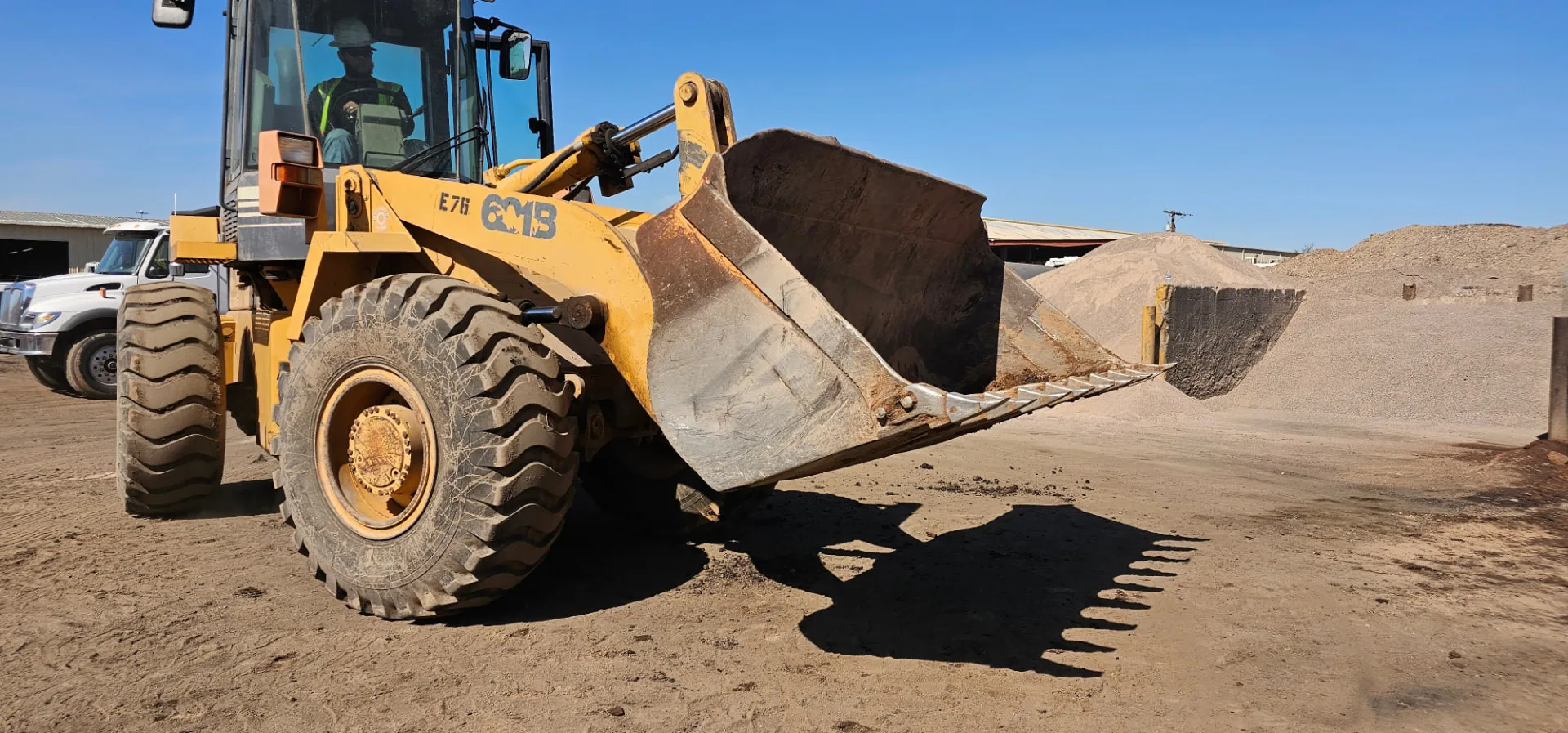
- In-house pavers, distributors & crews
Since 1993
30+
Years placing slurry & sealcoat in AZ

MORE PAVEMENT LIFE PER DOLLAR
For any pavement that actually carries traffic, public streets, HOA loops, commercial lots, industrial yards, slurry seal beats sealcoat on service life, structural value, and total dollars per year of pavement life. Sealcoat still has a place, just not on those surfaces.
Slurry adds structure, seal adds color
Slurry is a mix of emulsion, aggregate, filler, and water applied as a true wear course. Sealcoat is a thin liquid coating, mostly cosmetic.
Skid resistance is rebuilt, not painted
The aggregate in slurry restores surface macro-texture. Sealcoat leaves the underlying pavement's texture (or lack of it) unchanged.
2–3x the service life
In Arizona commercial and residential service, slurry seal typically performs 5–8 years vs. 2–3 for a sealcoat under the same traffic.
Public-works spec, not paint spec
Slurry is written into MAG 336 and ADOT 407. Sealcoat has no comparable public-works specification for arterial pavement.
One accountable contractor
American Asphalt self-performs slurry with in-house pavers, distributors, and rollers, not brokered sub-tier sealcoat sprayers.
Better dollars per year of life
On a lifecycle basis, slurry seal beats sealcoat on nearly every commercial, HOA, and municipal pavement, the up-front cost pays back over the cycle.
SPEC & LIFECYCLE AT A GLANCE
Two treatments, four honest data points. The right choice depends on the pavement, the traffic, and the budget cycle, but the numbers themselves aren't in dispute.
- Slurry: wear-course structure
- Sealcoat: cosmetic protection
- Slurry: 5–8 yr service in AZ
- Sealcoat: 2–3 yr service in AZ
Slurry Thickness
1/8" – 3/8" wear course
Sealcoat Thickness
20 – 30 mils coating
Typical Life (AZ)
Slurry 5–8 yr · Seal 2–3 yr
Spec Basis
ISSA A105 · MAG 336
RIGHT TREATMENT, RIGHT PAVEMENT
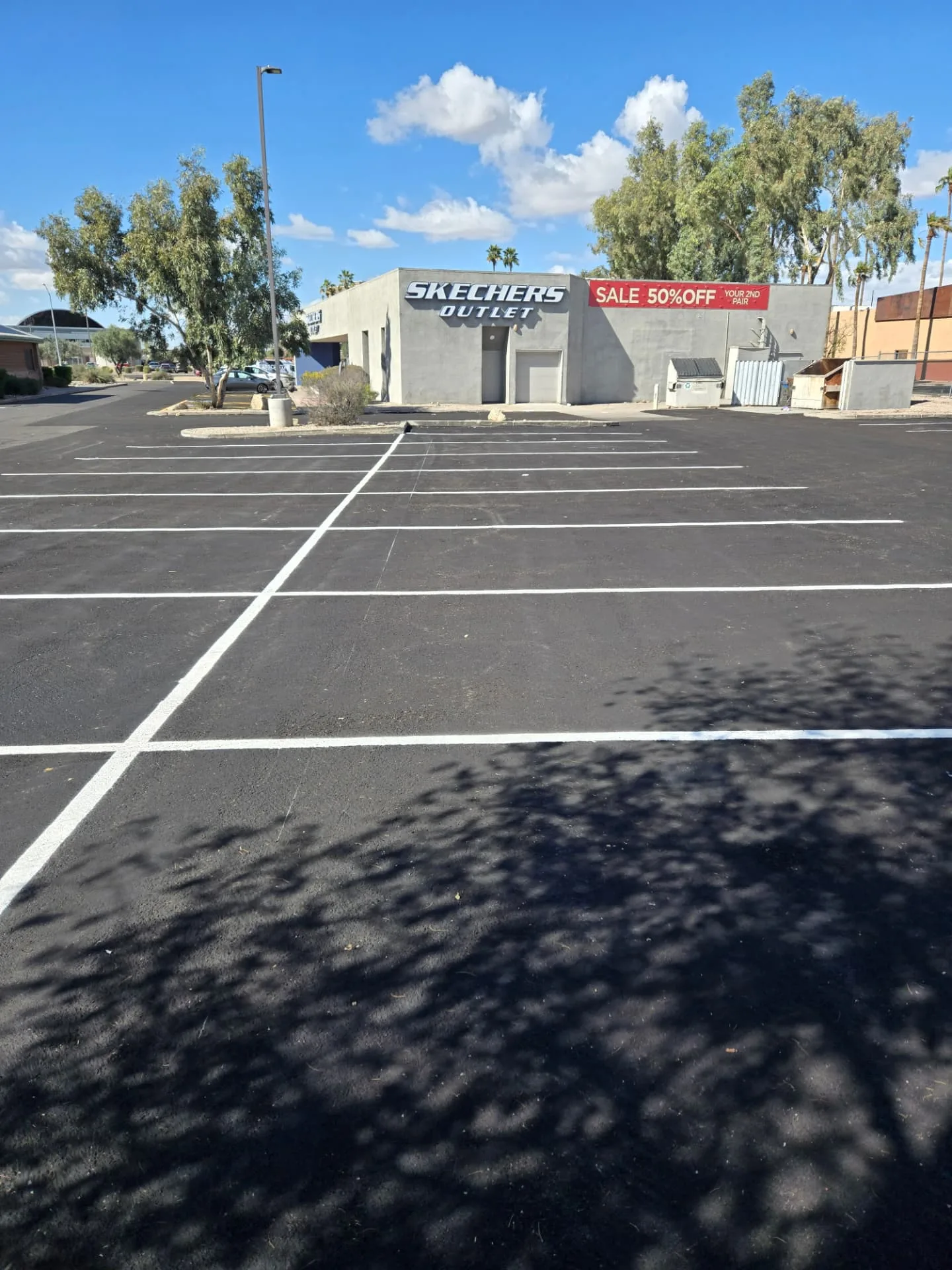
A quick breakdown of where a slurry seal is the honest answer and where a sealcoat still makes sense, based on how the surface actually gets used every day.
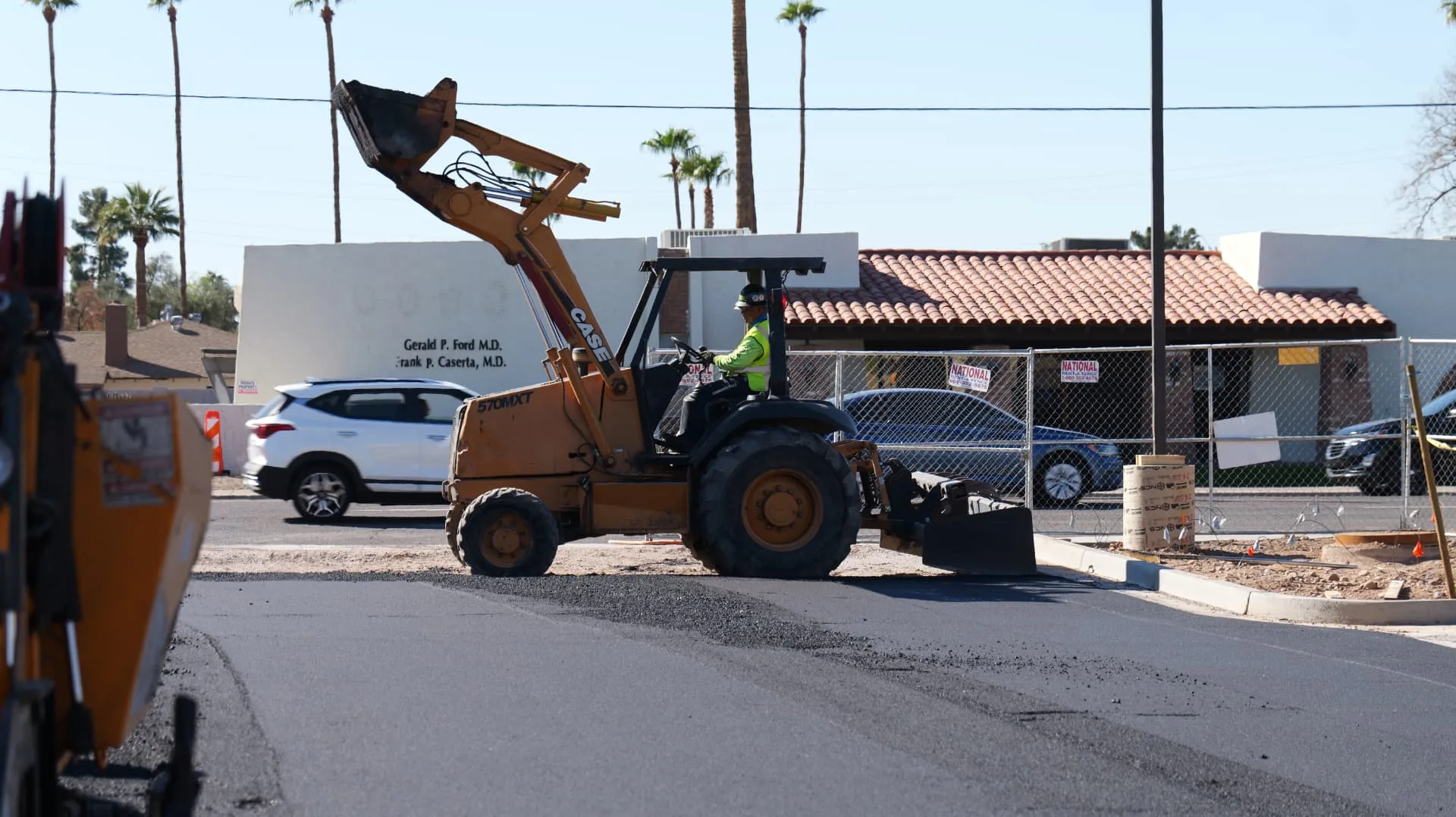
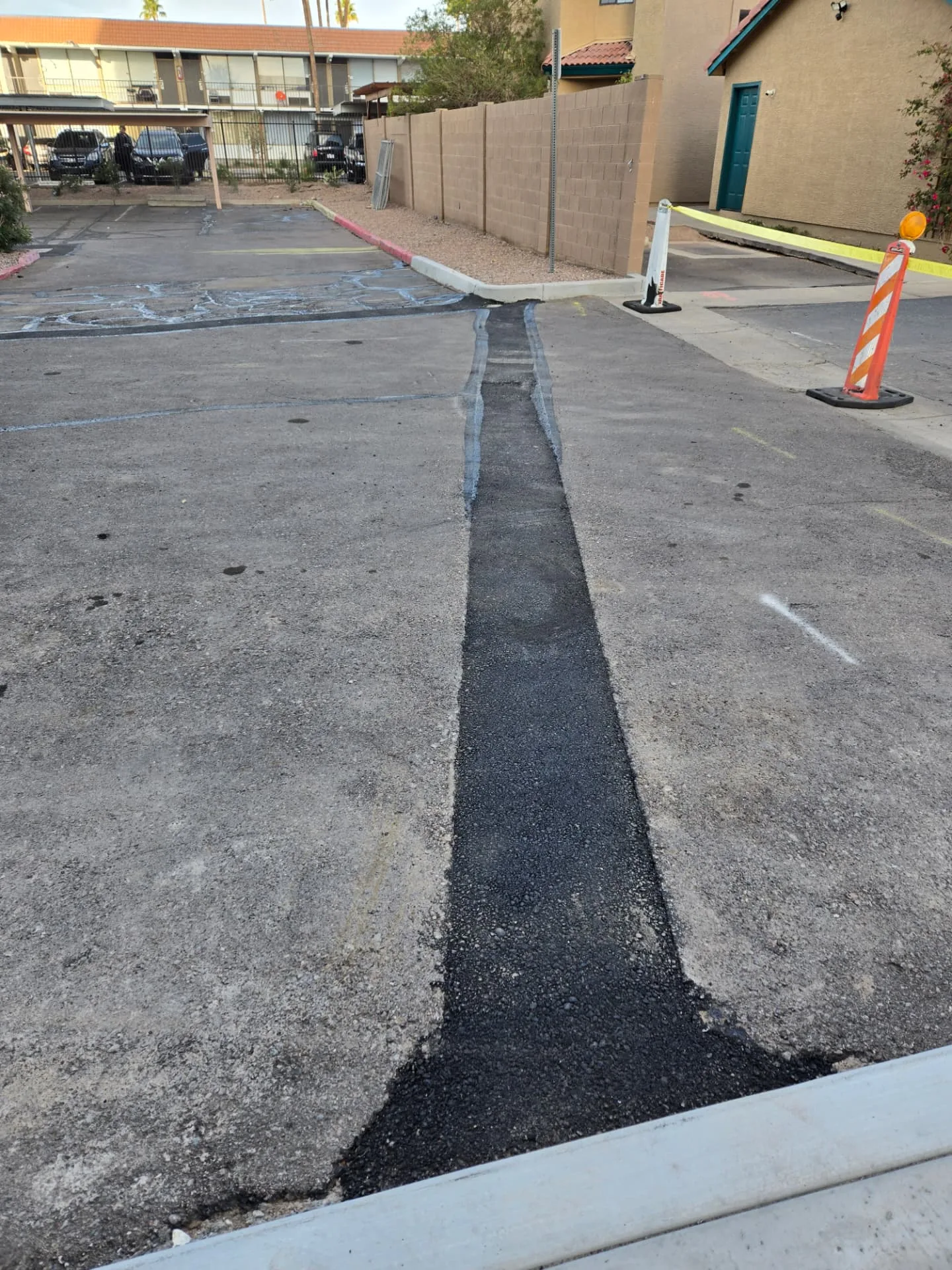
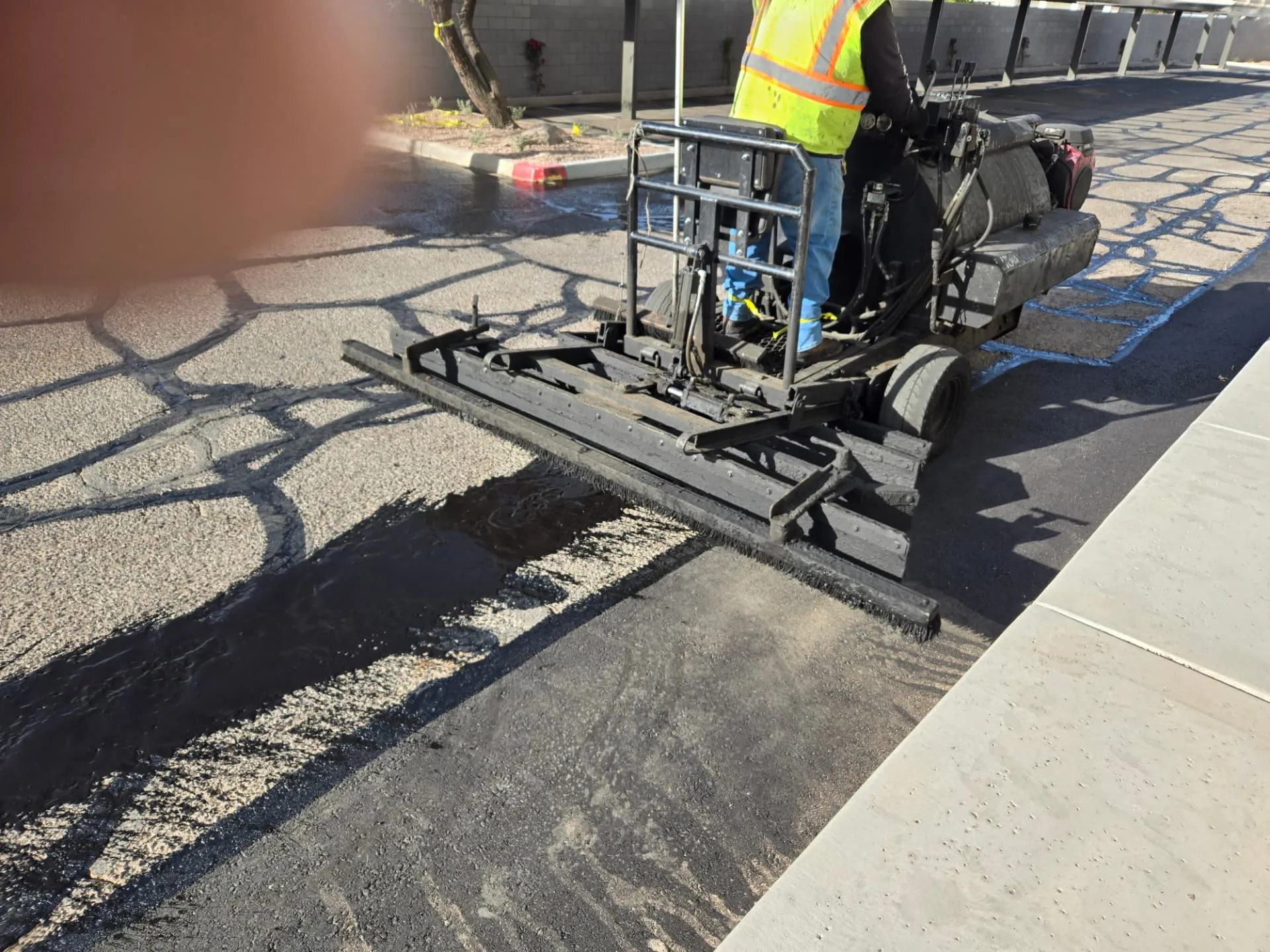
From Site Walk to Recommendation
Choosing between slurry and sealcoat isn't a preference, it's a decision driven by pavement condition, traffic loads, and how many years of life the owner is trying to buy. Here's how we walk through that decision on every project.
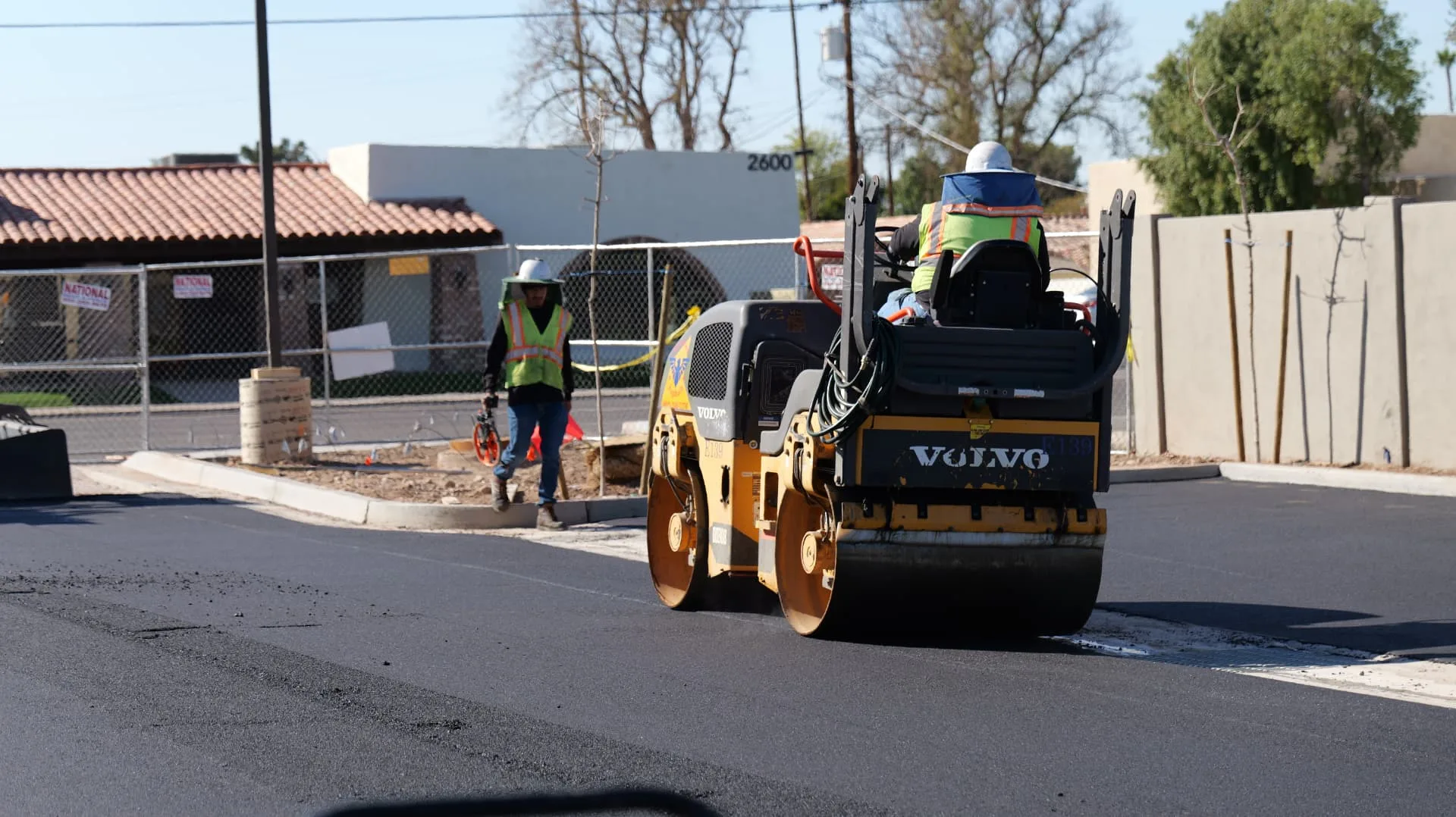
A short field video from an American Asphalt slurry placement, the wear course side of the comparison.
- 01Step
Assess pavement condition
We walk the site to determine if the asphalt has enough structural life to justify preservation, and which treatment fits the traffic.
- 02Step
Match spec to traffic
Streets, commercial lots, and industrial yards get slurry seal or micro-surfacing. Small low-traffic drives may still take a sealcoat.
- 03Step
Design the cycle
We recommend a treatment cycle, typically 5–8 years for slurry, that fits the reserve study, CIP, or capital-plan timeline.
- 04Step
Place, cure & document
In-house crews place the treatment, document application rates, and deliver a written warranty on the completed pavement.
SLURRY VS. SEALCOAT, LINE BY LINE
Same categories, honest numbers. This is the same comparison we walk owners, HOA boards, and property managers through on the site walk, nothing marketing, just what each product actually is.
THE SPECS BEHIND EACH TREATMENT
Slurry seal and micro-surfacing are governed by ISSA, MAG, and ADOT standard specifications. Sealcoat is not written into public-street specs. Here's the paper trail behind the treatments we place.
ISSA A105 – Slurry Seal
The published performance guideline that governs slurry seal mix design, aggregate gradation, and application rates on public and private pavement.
ISSA A143 – Micro-Surfacing
The heavier-duty cousin of slurry seal, polymer-modified, rut-filling, faster-curing. Written into ADOT 407 and used on public and heavy-commercial surfaces.
MAG Section 336
The Maricopa Association of Governments standard specification for slurry seal coats, used across Phoenix-metro public-works contracts.
ROC 155730 / 109709 / 105759
Licensed by the Arizona Registrar of Contractors for asphalt paving, seal coating, and general engineering, bonded and insured statewide.
ASTM D6690 Crack Seal
Where we recommend crack sealing as part of the preservation program, sealant is placed to ASTM D6690 ahead of the slurry treatment.
MUTCD Traffic Control
Every placement, slurry or sealcoat, is run under MUTCD-based traffic control with cones, signage, and flagging appropriate to the surface.
Site Walk & Recommendation
- Pavement condition walk and photo record
- Treatment recommendation matched to traffic
- Slurry mix design and product data sheets
- Preservation cycle recommendation (years)
- Budgetary pricing for capital planning
- Crack seal and patch quantities scoped separately
- Written workmanship warranty on placed slurry
- Certificate of insurance for owner / manager / HOA
Owners, Boards & Public Agencies
Anyone deciding how to spend pavement dollars, property owners, HOA boards, community managers, facilities directors, and municipal planners, should understand what a slurry seal is and what a sealcoat isn't before signing the PO.
SLURRY VS. SEALCOAT QUESTIONS
Straight answers from the estimators and crews who do the work across Arizona. Don't see your question? Call our office and talk to a real person.
Ready to protect
your pavement?
Get a free estimate on asphalt paving, slurry seal, sealcoating, striping, and full-service pavement maintenance from Arizona's trusted asphalt experts, serving commercial, HOA, and municipal properties statewide.
Hours
Mon-Fri 7 AM - 5 PMSat-Sun Closed